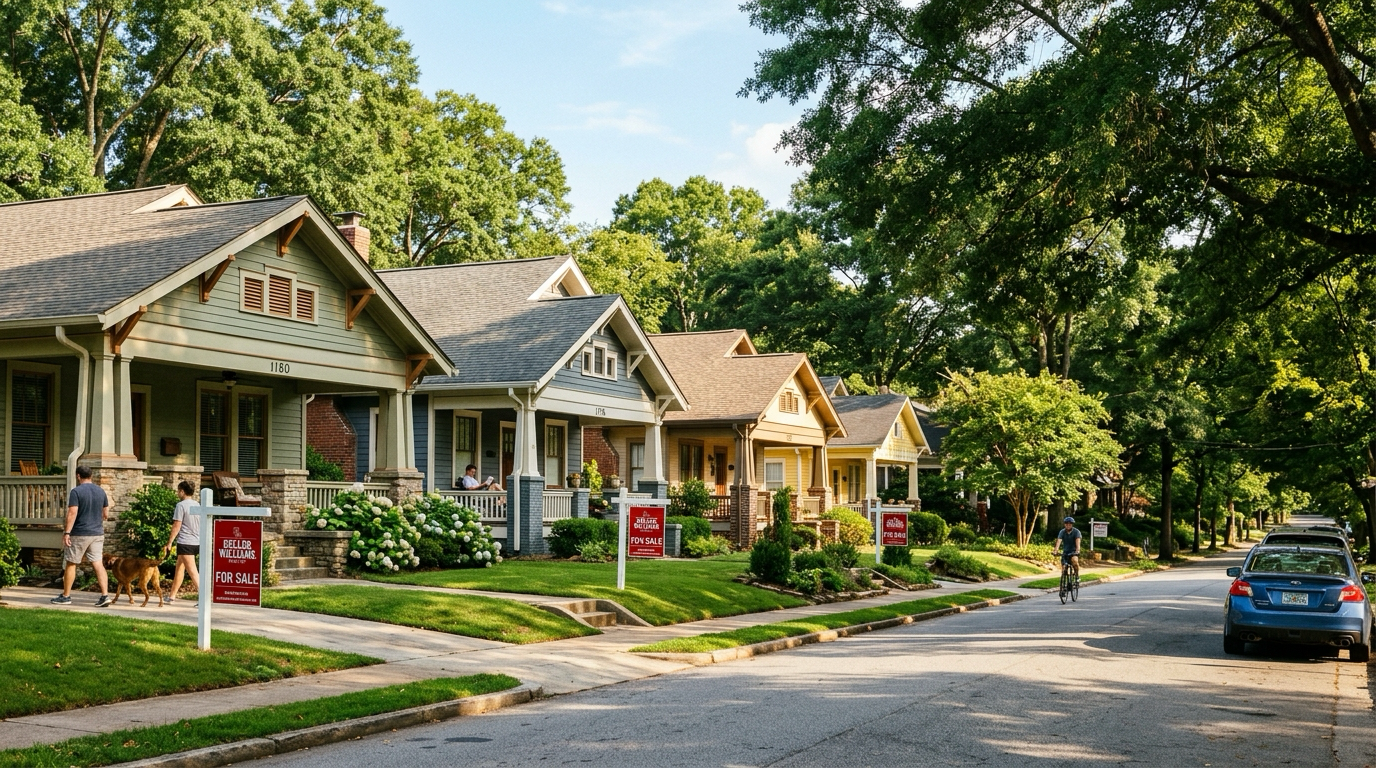

If you’ve been watching Atlanta’s real-estate market this spring, you’ve probably noticed the change: fewer open-house stampedes, more price reductions, and a general sense that the feverish pace of the pandemic era has given way to something far more cautious.
Industry data confirm the vibes. Metro Atlanta’s housing market is now widely described as balanced — a polite way of saying it has cooled considerably from the seller-dominated sprint of 2021 through early 2024.
The numbers
Properties across the metro area are spending an average of 37 to 59 days on the market, depending on the neighborhood — roughly double the turnaround times seen during the tightest months of the pandemic boom.
Median sale prices in the city of Atlanta hover in the $400,000 to $435,000 range, showing only modest year-over-year movement. Some submarkets are posting slight declines, while others — particularly walkable intown neighborhoods with strong school districts — have held firm.
Inventory levels are notably higher than a year ago. Buyers have more choices, more time to think, and more leverage to negotiate inspection repairs and closing credits — concessions that were virtually unheard of two years ago.
What changed
Two forces converged. Mortgage rates, which have remained elevated by historical standards, have dampened buyer urgency. And a growing number of homeowners who delayed listing during the rate lock-in period have finally come to market, pushing available inventory upward.
The result is a market that punishes overpricing. Agents say that listings priced at or slightly below fair market value still attract multiple offers and sell within a week or two. But homes listed at aspirational numbers — even 5 to 8 percent above comparable recent sales — are languishing.
“The market is telling you the price. If you ignore it, you’ll be doing a price reduction in three weeks and chasing the market down.”
— Atlanta-area real-estate broker
Advice for buyers
For buyers who sat out the frenzy years, the current conditions offer a meaningfully different experience:
- Get fully underwritten pre-approval before you start looking. In a market where sellers are more cautious, a strong financing letter can be the deciding factor.
- Negotiate. Inspection repairs, closing-cost credits, and seller-paid rate buydowns are all back on the table.
- Think hyper-local. Metro Atlanta is enormous, and conditions vary block by block. A property in Buckhead may behave very differently from one in Kennesaw or East Point.
Advice for sellers
- Price it right from the start. The first two weeks on market generate the most showings and the strongest offers. Overpricing and then cutting later signals desperation.
- Presentation matters more now. Fresh paint, professional photography, and staged interiors are no longer optional — they’re the difference between a quick sale and a stale listing.
- Be prepared for longer timelines. A 30- to 45-day marketing period is perfectly normal in a balanced market. Patience is not the same as failure.
The bigger picture
Economists and housing analysts caution against reading too much drama into the slowdown. Metro Atlanta’s population continues to grow, the regional job market remains healthy, and housing fundamentals — limited legacy supply, strong in-migration from higher-cost metros — haven’t changed.
What has changed is buyer behavior. Affordability pressures and lingering economic uncertainty have made purchasers more deliberate. That’s a market correction, not a collapse.
Jordan Reyes covers business, the economy, and real estate for WACN 21. Reach him at jreyes@wacn21.com.