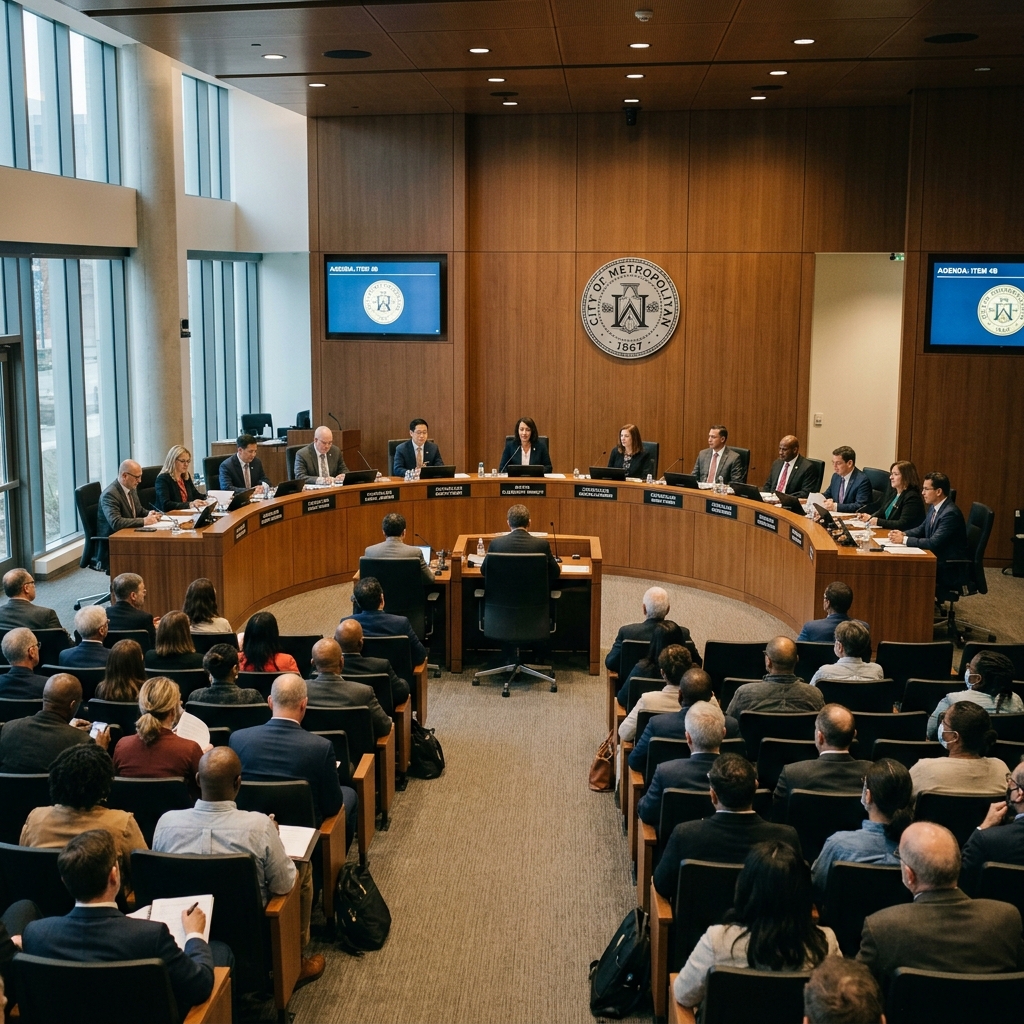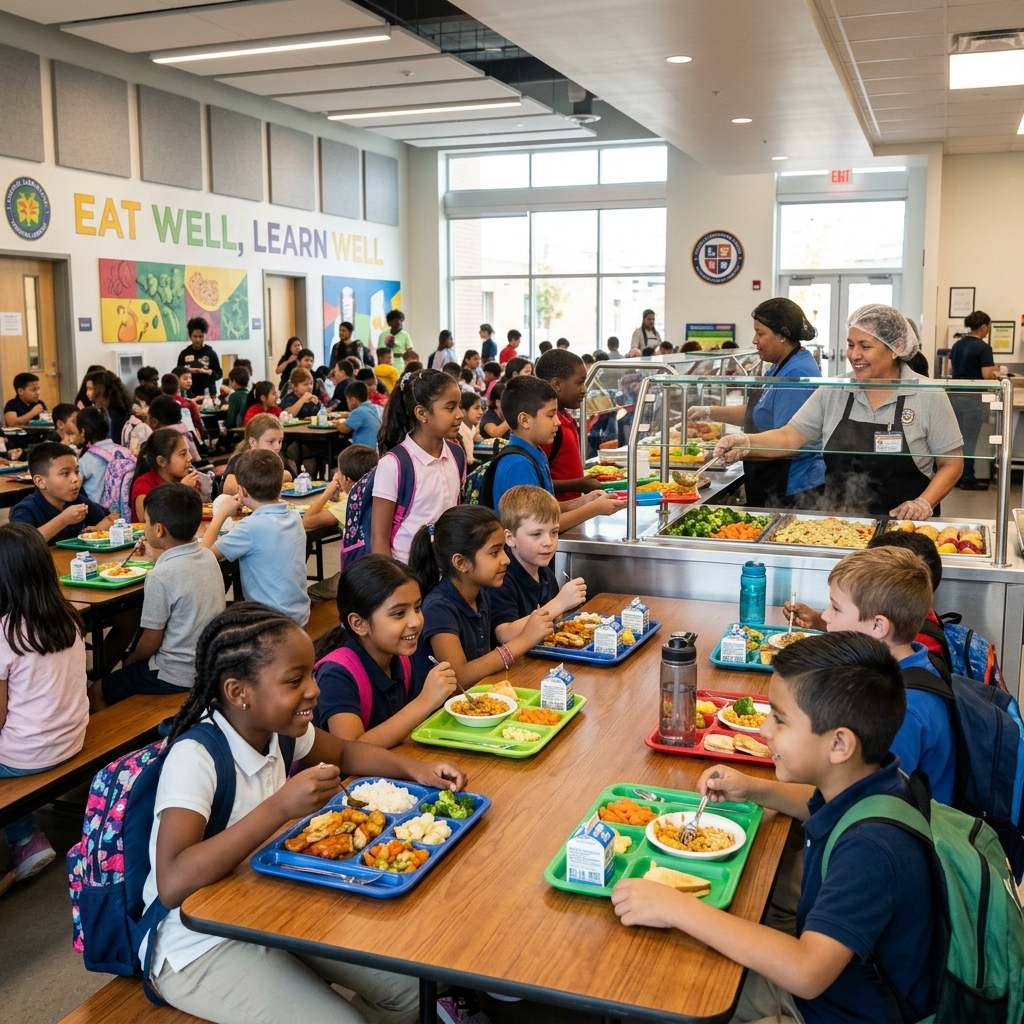

Atlanta Public Schools will offer free breakfast and lunch to every student beginning this fall, regardless of household income, under a new policy unanimously approved by the school board Tuesday night.
The Universal Free Lunch program covers all 50,200 students across APS’s 87 schools — making it one of the largest school districts in the country to extend free meals to every child, regardless of need.
What’s in the program
- Free breakfast for all K-12 students, served in classrooms or cafeterias
- Free lunch for all K-12 students
- Free after-school snacks at all schools with after-care programs
- No paperwork — no income verification, no enrollment forms, no opt-in
The program is funded through a combination of:
- Federal Community Eligibility Provision (CEP) — APS qualifies district-wide because more than 40 percent of students are already eligible for free/reduced meals
- State of Georgia school-nutrition supplement
- APS operating budget — about $4.2 million in additional local dollars for the first year
Why now
APS has offered free meals to about 78 percent of its students for years, through the federal CEP. But the remaining 22 percent — roughly 11,000 students — have had to apply and re-apply annually, and the application process has been a barrier.
“We had families who qualified but didn’t apply because of the paperwork, or the stigma, or the fact that the system was just hard to navigate,” said APS Superintendent Bryan Johnson. “Universal free means every kid eats. No questions.”
The change brings APS in line with other large Georgia districts that have already gone universal, including DeKalb County Schools (2022) and Gwinnett County Public Schools (2024). Fulton County Schools has not yet moved to universal but is studying the option.
What it means for families
For a typical APS family with two school-age children, the change saves roughly $1,200 a year in meal costs at school. But the bigger effect, administrators say, is the administrative simplicity — no more lost forms, no more end-of-year scrambles, no more kids going hungry in the back of the classroom because their family didn’t get the paperwork in on time.
“We’ve seen research on this. When meals are universal, the kids who most needed them but were just outside the income threshold are the biggest beneficiaries. Those are the kids who are hardest to reach, and universal means we actually reach them.”
— Dr. Whitney Mathews, APS nutrition services director
What it means for the district
Universal free lunch is not actually free. The district is trading administrative cost (paper processing, eligibility verification, payment tracking) for a higher per-meal subsidy. The net cost of the program is about $4.2 million in Year 1, declining to roughly $3.6 million in subsequent years as fixed costs amortize.
The trade-off was endorsed unanimously by the board, including members who have been vocal about budget discipline.
“It’s the right call, and it’s also the more efficient call,” said board chair Eshé Collins. “We’re going to be doing it more cheaply than we were doing it before, and we’ll reach more kids.”
The bigger picture
APS is the largest district in Georgia to go universal, and one of the largest in the Southeast. The policy puts Atlanta in the same conversation as New York City, Chicago, and Los Angeles, all of which adopted universal free meals in recent years.
The change also lines up with the Biden-era push to expand free school meals nationwide, which has been picked up by a handful of states including California, Maine, and Minnesota, all of which now fund universal meals at the state level.
Implementation timeline:
- June–July 2026: Software update + cafeteria staff training
- August 2026: First day of school — universal free meals go live
- First-year review: June 2027 (board will evaluate participation rates and cost)
Kira Tomlinson covers Atlanta’s food, arts, and family scene for WACN 21. Reach her at ktomlinson@wacn21.com.