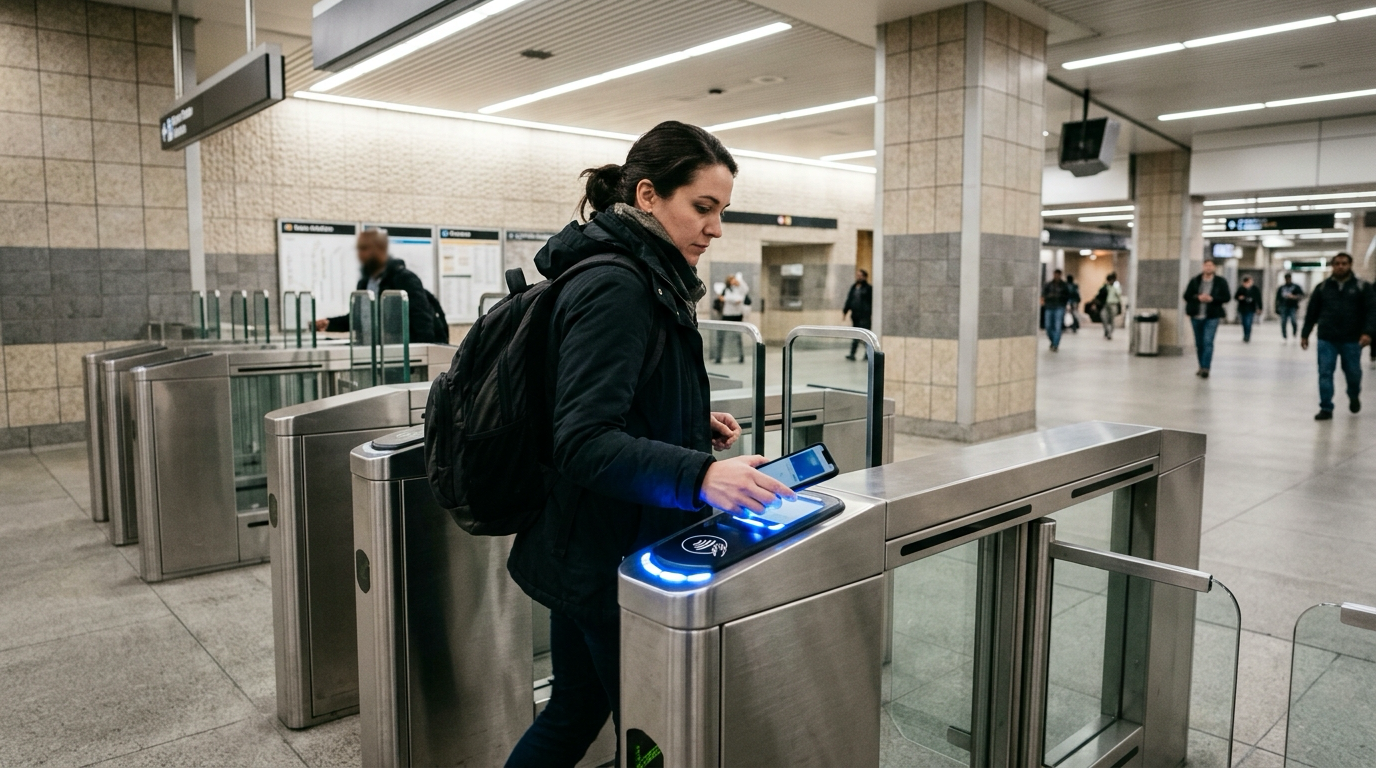

MARTA riders walked up to fare gates across the Atlanta rail network Friday afternoon and did something that would have been unthinkable just months ago — they tapped a bank card, held up a phone, or flicked a smartwatch, and walked right through.
The transit authority’s Better Breeze contactless fare system went fully live on May 30, marking one of the most visible changes to the daily commuting experience in the system’s four-decade history.
Out With the Old, In With the Tap
The activation means the era of the original Breeze card — the reloadable plastic fare card that has been a fixture of Atlanta transit since 2006 — is now giving way to an open-payment model used by major transit systems around the world.
“This is what modern transit looks like,” MARTA Interim General Manager and CEO Jonathan Hunt said at a midday event at Five Points Station. “You shouldn’t need a special card to ride. Your bank card, your phone — that’s your fare.”
Under the new system, riders can pay with:
- Contactless credit and debit cards (Visa, Mastercard, American Express, Discover)
- Mobile wallets including Apple Pay, Google Pay, and Samsung Pay
- Smartwatches and other NFC-enabled wearable devices
Fare gates across all 38 rail stations have been equipped with new tap readers and were formally closed and activated Friday, meaning riders must now tap to enter and exit the paid fare zone.
A Cornerstone of the ‘Big 6 in 26’
Better Breeze is a central piece of MARTA’s ambitious “Big 6 in 26” initiative — a package of six major service improvements the agency pledged to deliver within calendar year 2026. The initiative also includes the recently launched NextGen Bus Network and the Reach on-demand microtransit service.
Officials said the contactless rollout had been in testing phases at select stations since late 2025, with a soft launch at Hartsfield-Jackson airport stations drawing tens of thousands of test transactions.
What Riders Need to Know
MARTA emphasized that existing Breeze cards will continue to work during a transition period, though the agency did not specify an end date for legacy card acceptance. Reduced-fare riders, including seniors, students, and persons with disabilities, will receive new contactless cards through MARTA’s eligibility programs.
- No app download is required to use a bank card or mobile wallet.
- Fare capping is built in — the system tracks daily and weekly spending and automatically stops charging once a rider hits the equivalent of a day pass or weekly pass threshold.
- Transfer credits between bus and rail are applied automatically.
Transit advocates praised the change but urged the agency to ensure equity for unbanked riders who may not carry contactless-enabled cards.
Reaction From Riders
At Peachtree Center Station shortly after the launch, commuters offered mixed but largely positive reactions.
“I’ve been waiting for this,” said Terrence Caldwell, 34, a Midtown office worker who said he had lost three Breeze cards in the past year. “My phone is always on me. This just makes sense.”
Others said they would miss the simplicity of the old system. “I liked having one card for one thing,” said Gloria Hines, 62, of Decatur. “But I’ll get used to it.”
A National Trend Comes to Atlanta
Atlanta joins a growing list of U.S. cities — including New York, Chicago, Boston, and the San Francisco Bay Area — that have adopted open-payment transit fare systems. Transit technology analysts say contactless payment reduces boarding times, lowers the cost of producing and distributing proprietary fare cards, and removes a barrier for occasional riders and tourists.
MARTA officials said they expect the system to process more than 200,000 tap transactions per week once ridership patterns stabilize.
The agency’s remaining “Big 6” milestones are expected to roll out through the second half of the year.
Elena Vasquez reports on City Hall and transportation for WACN 21 News. Reach her at evasquez@wacn21.com.