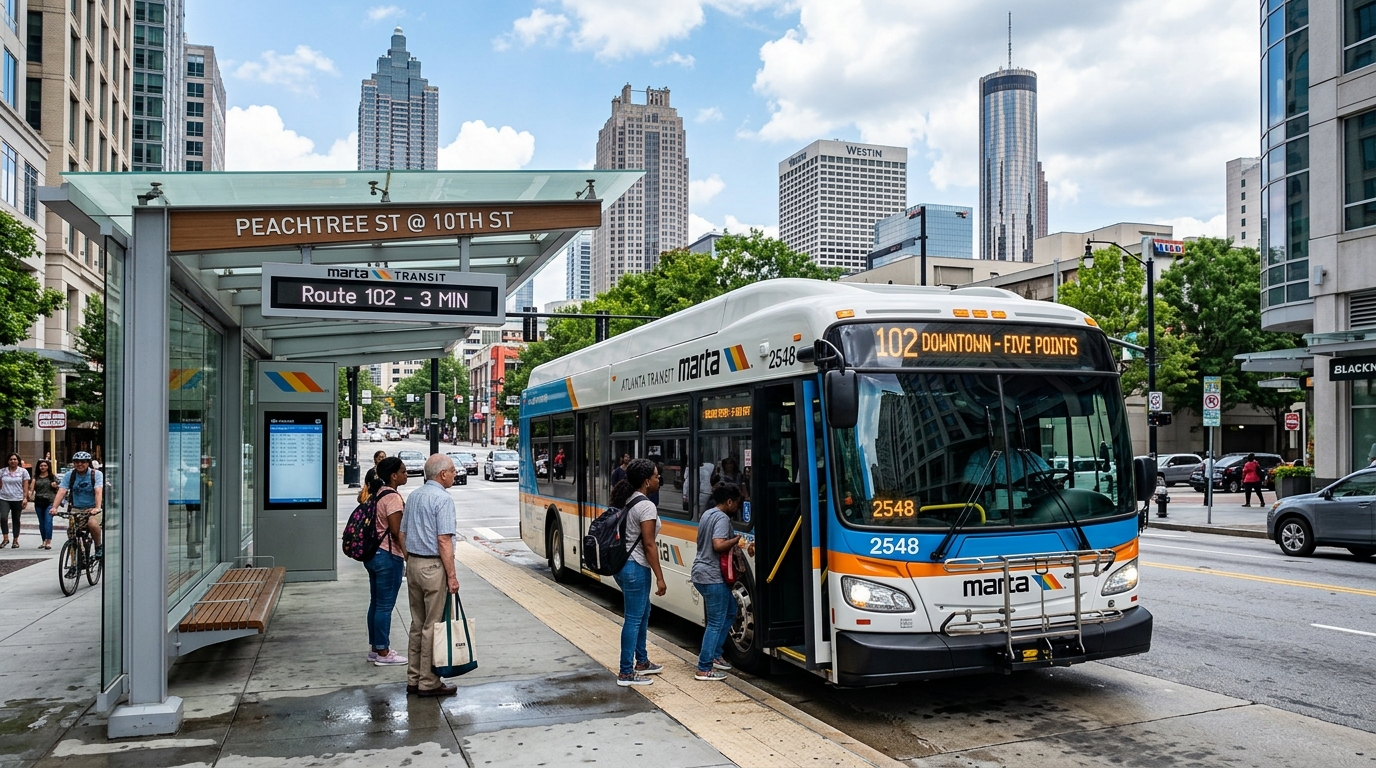

ATLANTA — In eight days, MARTA riders will step onto an entirely reimagined bus system. The agency’s NextGen Bus Network, set to launch on April 18, 2026, represents the most comprehensive redesign of Atlanta’s bus routes since the 1970s — and transit officials say the changes will reshape how hundreds of thousands of commuters move through the city.
More Buses, More Often
At the heart of the overhaul is a dramatic expansion of high-frequency service. Under the current network, only five corridors offer buses arriving every 15 minutes or better. When the NextGen network goes live, that number triples to 17 high-frequency corridors, blanketing more of the city with service that riders can count on without needing to consult a schedule.
The redesign is the product of years of planning, community engagement, and route analysis. MARTA officials have emphasized that the new network prioritizes connecting riders to jobs, healthcare, and education — not simply replicating legacy routes that in some cases have gone unchanged for decades.
Atlanta’s First Bus Rapid Transit Line
Perhaps the most high-profile element of the launch is the debut of the MARTA Rapid A-Line, the region’s first-ever Bus Rapid Transit (BRT) line. The A-Line will connect Downtown Atlanta to Summerhill and the BeltLine’s Southside Trail, providing a new rapid-transit spine through some of the city’s fastest-growing neighborhoods.
The five-mile BRT loop links Five Points, Georgia State, and Garnett rail stations to the Capitol Gateway, Summerhill, and Peoplestown communities — areas that have seen explosive residential and commercial development in recent years but have historically lacked direct high-frequency transit connections.
BRT service differs from standard bus routes by offering dedicated lanes or signal priority at intersections, limited stops, and level boarding — features designed to make the ride faster and more reliable than conventional bus service.
What Riders Should Expect
MARTA has cautioned that any network redesign of this scale will require an adjustment period. Some existing routes will be restructured or renumbered, and riders who have relied on specific stop locations may find their nearest stop has shifted. The agency is deploying additional staff at major transfer points in the days following the launch and has updated its trip-planning tools on the MARTA app and website.
A Pivotal Moment for Atlanta Transit
The NextGen network arrives at a critical juncture for public transit in Atlanta. The city continues to grapple with traffic congestion, population growth, and pressure to reduce transportation emissions. Advocates have long argued that a more rational, frequency-based bus network is the single most cost-effective way to expand transit access without building new rail infrastructure.
Whether the redesign delivers on its promise will depend on ridership response in the weeks and months ahead. But for now, MARTA is betting that a bolder, more connected bus system is exactly what Atlanta needs.
WACN 21 News will provide live coverage of the NextGen Bus Network launch on April 18.
Elena Vásquez covers Atlanta city hall and transportation for WACN 21. Reach her at evasquez@wacn21.com.