
The Metropolitan Atlanta Rapid Transit Authority launched MARTA Reach on Friday, a new on-demand, curb-to-curb microtransit service operating across 12 designated zones in metro Atlanta. The service is designed to close persistent first-and-last-mile gaps that have long kept riders from connecting efficiently to the region’s rail and bus network.
How It Works
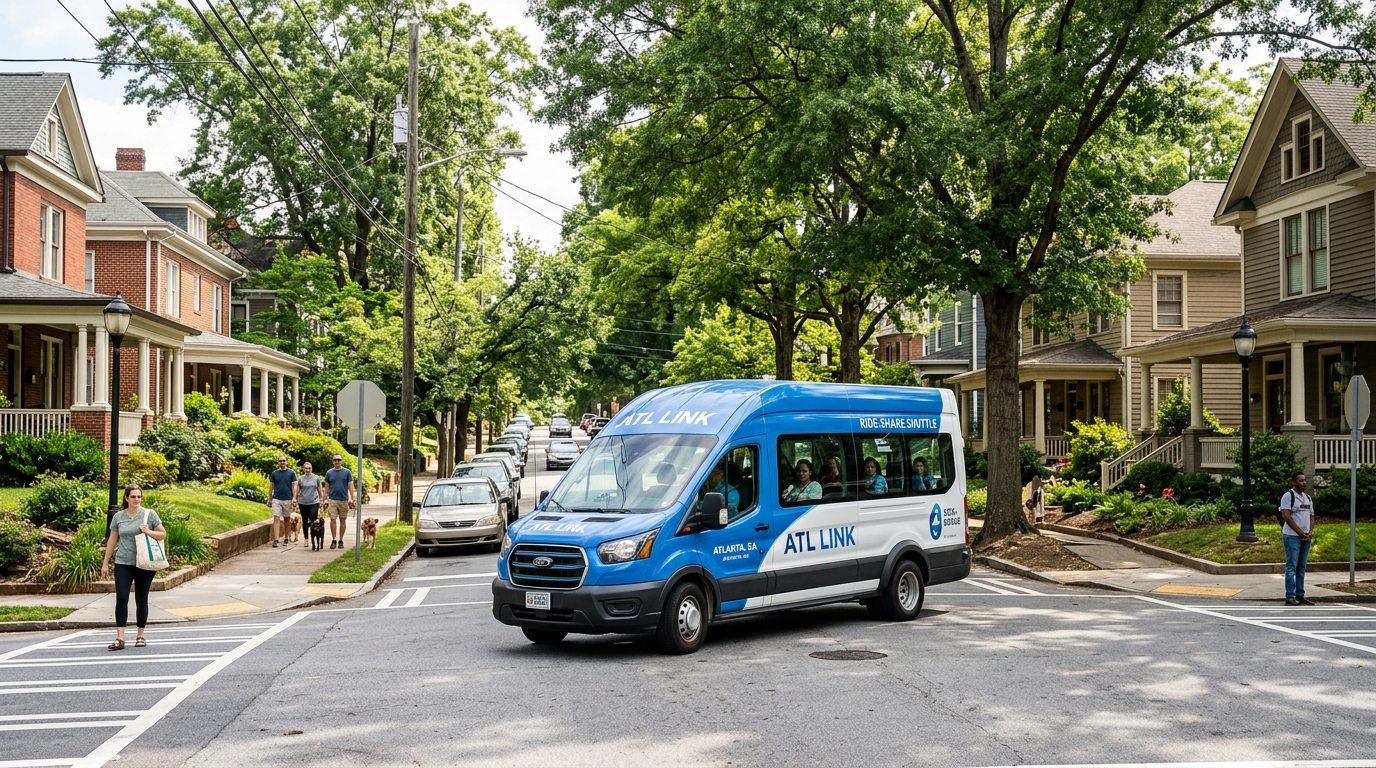
MARTA Reach operates through a fleet of branded shuttle vans that pick up and drop off riders within defined service zones. Passengers can request a shared ride through the MARTA Reach mobile app, the agency’s website, or by calling a dedicated phone line. The system uses dynamic routing software to bundle nearby trip requests, optimizing vehicle paths in real time.
Rides are free for the initial launch period, and the service runs from 6 a.m. to 9 p.m. on weekdays, with reduced weekend hours. Each zone is anchored to at least one MARTA rail station or high-frequency bus route, ensuring that Reach trips feed directly into the broader transit network rather than functioning as a standalone car service.
The 12 Zones
The 12 Reach zones span a mix of urban neighborhoods, suburban corridors, and historically underserved communities across Fulton, DeKalb, and Clayton counties. The zones were selected based on ridership data, equity metrics, and areas where fixed-route bus service has struggled to maintain frequency or coverage.
Key zones include areas around North Springs, Bankhead, East Point, and Kensington stations, as well as corridors in south DeKalb and parts of unincorporated Fulton County. MARTA officials said the zone boundaries were drawn to cover roughly three to four square miles each, a size intended to keep average wait times under 15 minutes during peak hours.
Strategic Rationale
The launch of MARTA Reach is not happening in isolation. It is a deliberate precursor to the agency’s NextGen Bus Network overhaul, a sweeping redesign of the entire bus system that is expected to roll out in phases beginning later this year. NextGen will consolidate some lower-ridership routes and shift resources toward higher-frequency corridors — a change that could leave some neighborhoods without a traditional bus stop nearby.
MARTA Reach is intended to fill those gaps before they open. By establishing microtransit zones now, the agency is building a complementary service layer that can absorb riders in areas where fixed routes are trimmed or restructured.
“The goal is seamless connectivity,” MARTA officials said in a statement. “Reach gives us the flexibility to serve communities that don’t fit neatly into a traditional fixed-route model.”
Ridership Expectations and Costs
MARTA projects that Reach will serve approximately 3,000 to 5,000 riders per week across all 12 zones during the initial rollout. The agency has contracted with a private microtransit operator to manage the fleet, with MARTA retaining control over branding, fare policy, and route planning.
The service is funded through a combination of federal transit grants and MARTA’s existing operating budget. Officials said the per-ride cost is competitive with paratransit services and significantly lower than subsidizing underperforming fixed-route buses in the same areas.
What Comes Next
MARTA has signaled that additional zones could be added based on performance data from the initial 12. The agency is also exploring integration with the Breeze fare system, which would allow riders to pay for Reach trips using the same card or app they use for rail and bus service.
For riders in the designated zones, the pitch is straightforward: request a ride, get picked up near your door, and connect to the rest of the MARTA network without waiting for a bus that may come once an hour — or not at all.
Elena Vasquez reports on City Hall and transportation for WACN 21 News. Reach her at evasquez@wacn21.com.