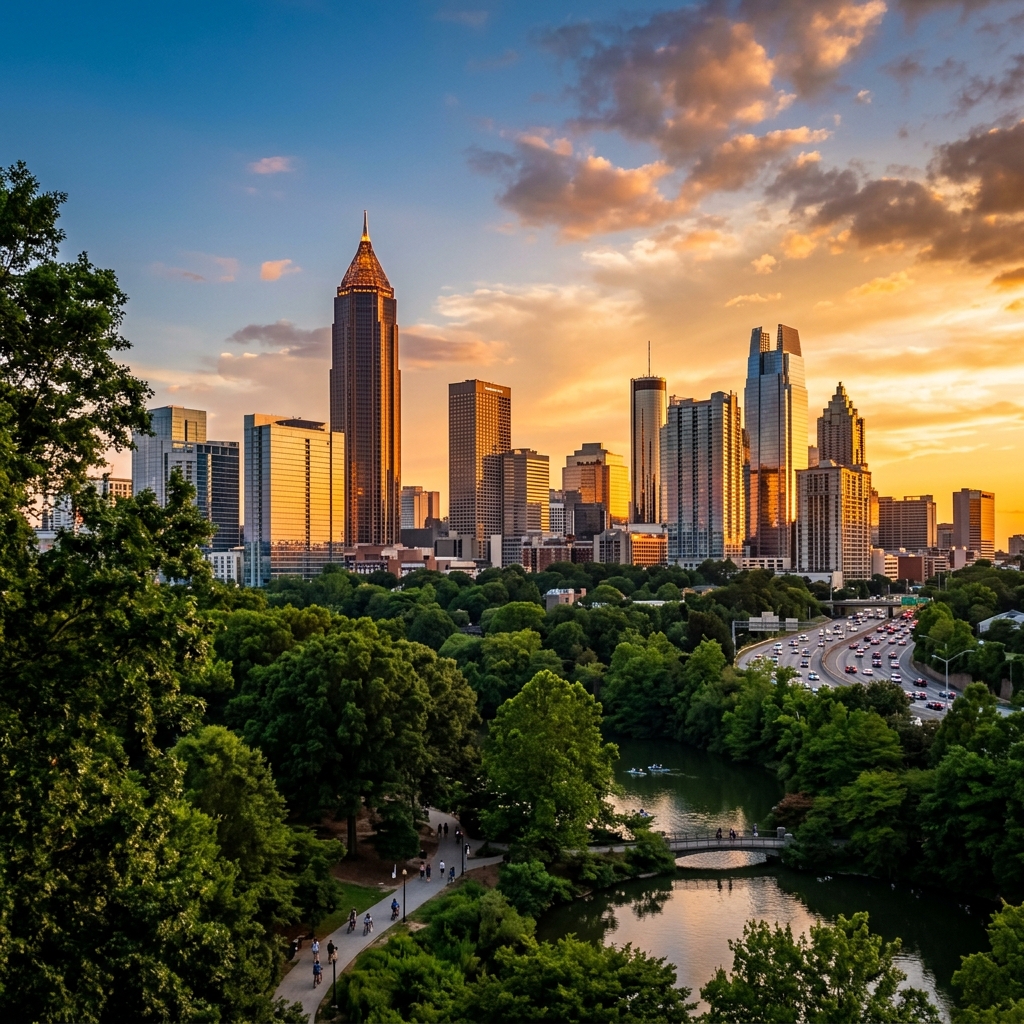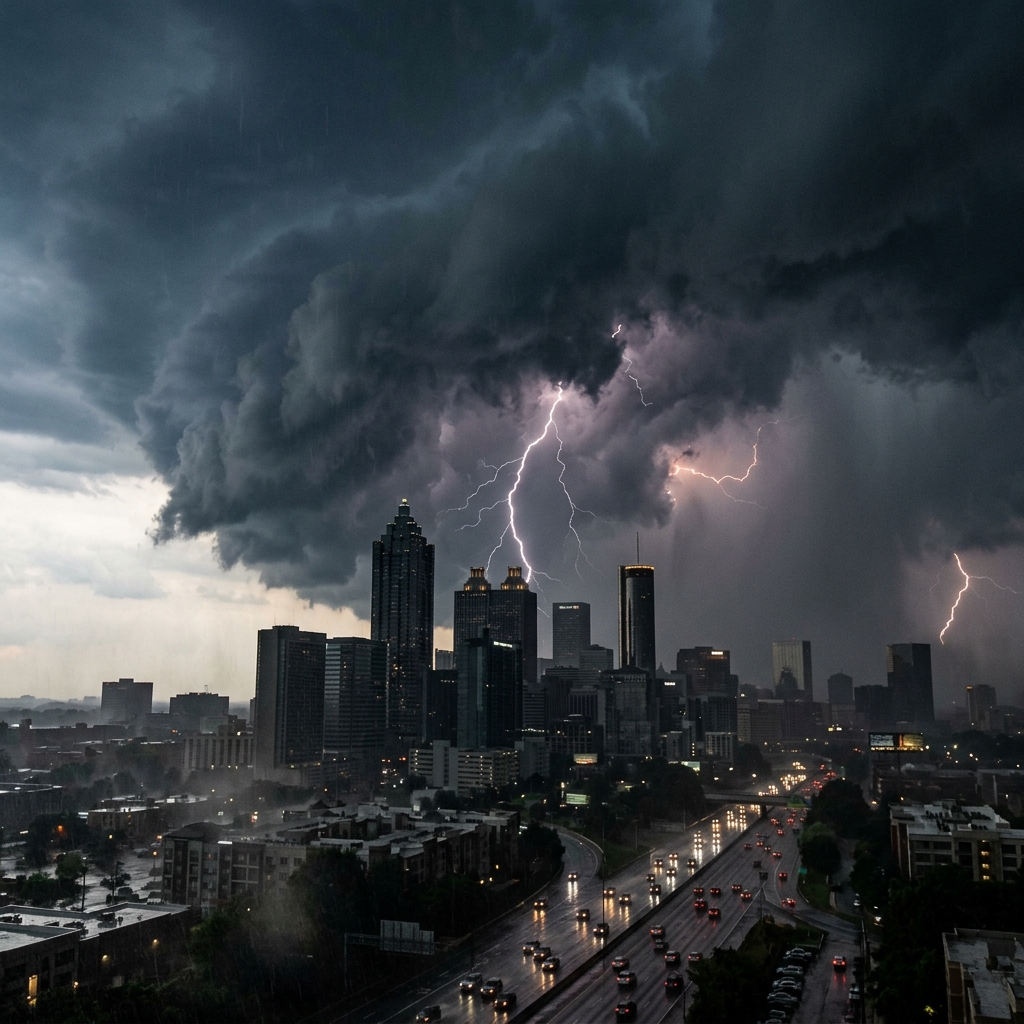

A line of severe thunderstorms tore across metro Atlanta Wednesday afternoon, dumping several inches of rain in under two hours and sending floodwater cascading across the Downtown Connector, through Midtown intersections, and into low-lying neighborhoods on the city’s west side.
The National Weather Service had issued a flash flood warning for Fulton and DeKalb counties shortly after 3 p.m. By 4 p.m., the consequences were visible across the city.
Downtown Connector Submerged
The most dramatic flooding occurred along the Downtown Connector — the merged stretch of Interstates 75 and 85 that carries more than 300,000 vehicles per day through the heart of the city.
“It went from heavy rain to standing water in the lanes in about 20 minutes,” said Georgia Department of Transportation spokesperson Dana Kurtz. “We had to shut down multiple lanes in both directions.”
GDOT and Atlanta police closed northbound lanes near the Williams Street overpass and southbound lanes near University Avenue after water reached depths that made safe passage impossible. Motorists who had already entered the flooded stretch were stranded, with several vehicles stalled in high water.
Emergency crews responded to at least a dozen water-rescue calls across Fulton County between 3:30 and 6 p.m., according to Atlanta Fire Rescue. No serious injuries were reported.
Midtown Streets Turned to Rivers
In Midtown, stormwater overwhelmed drainage systems along 10th Street and Piedmont Avenue, flooding intersections and sending water into the ground floors of at least two apartment buildings near Piedmont Park.
Residents shared videos on social media showing knee-deep water flowing through parking garages and across sidewalks. MARTA reported delays on its Midtown bus routes as drivers were forced to reroute around impassable streets.
The city’s Department of Watershed Management said aging stormwater infrastructure in parts of Midtown is not designed to handle the intensity of rainfall that hit the area Wednesday.
“These systems were engineered for a different climate,” a department spokesperson said. “When you get two to three inches in 90 minutes, there’s simply nowhere for the water to go.”
Drought Persists Despite Deluge
In a paradox that has defined Georgia’s spring weather pattern, the state remained in drought even as streets flooded. The U.S. Drought Monitor’s most recent assessment classified much of north Georgia under moderate drought conditions, with some areas approaching severe status.
Meteorologists said the intense, short-duration storms characteristic of late May do little to replenish deeper soil moisture or reservoir levels.
- Lake Lanier, metro Atlanta’s primary water supply, remained more than four feet below its full-pool level as of Wednesday morning.
- Soil moisture readings across north Georgia showed deficits despite the surface flooding.
- Year-to-date rainfall for Atlanta was running nearly three inches below the historical average.
“Flash flooding and drought are not contradictory — they go hand in hand,” said a National Weather Service meteorologist in Peachtree City. “Hard, dry ground doesn’t absorb water well. It runs off fast, and you get exactly what you saw today.”
More Storms on the Horizon
The Wednesday storms were not the end of the pattern. Forecasters warned that an additional round of severe weather is expected to move through the region between May 24 and May 26, with the potential for damaging winds, large hail, and another round of heavy rainfall.
The City of Atlanta urged residents to:
- Avoid driving through standing water — “Turn around, don’t drown”
- Clear storm drains near homes and businesses ahead of the next system
- Sign up for Fulton County emergency alerts at the county’s public safety website
- Move vehicles from low-lying areas if storms are in the forecast
GDOT said all lanes of the Downtown Connector were reopened by approximately 7:30 p.m. Wednesday after floodwaters receded and crews cleared debris from the roadway.
The city said it would accelerate inspections of stormwater infrastructure in the most heavily affected areas ahead of the weekend storm threat.
Samuel Okonkwo covers breaking news and public safety for WACN 21 News. Reach him at sokonkwo@wacn21.com.