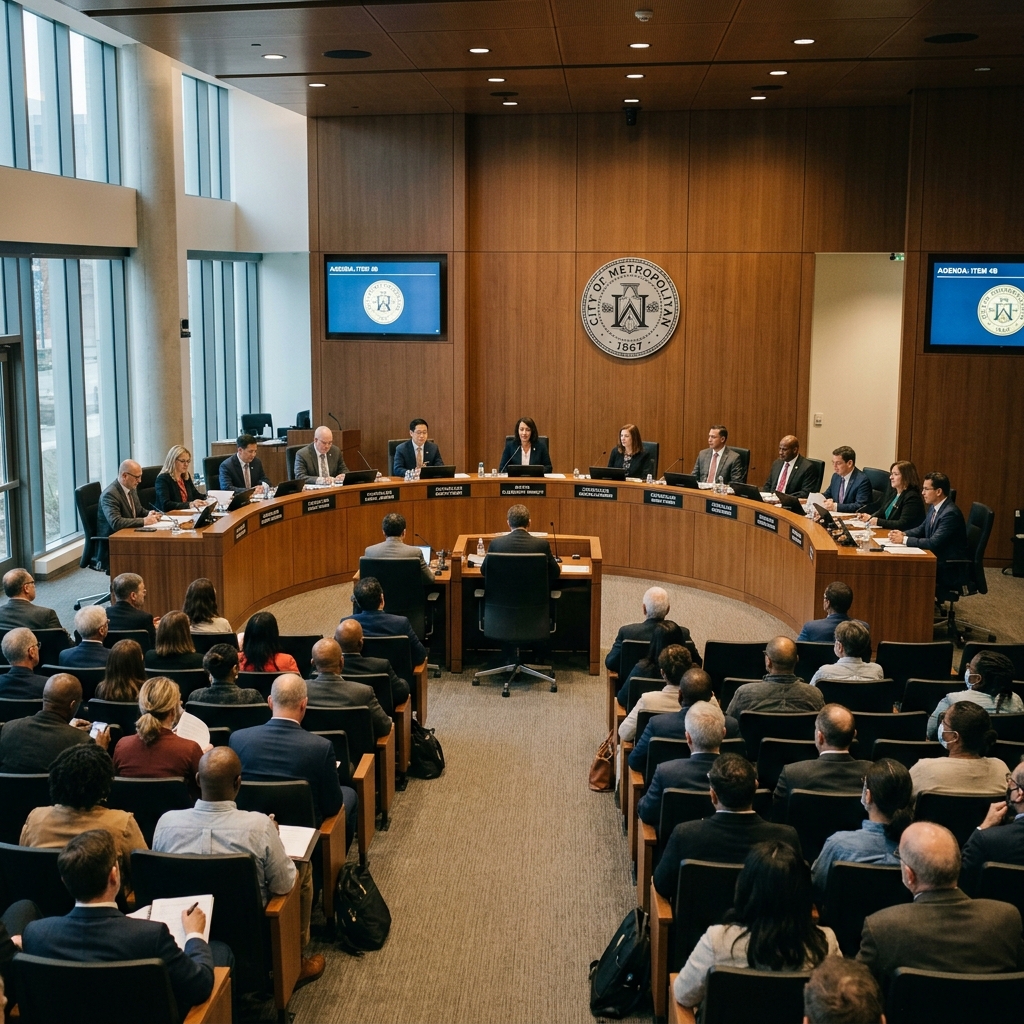

Mayor Andre Dickens unveiled a $5 billion Neighborhood Reinvestment Initiative on Tuesday, a sweeping plan that would direct fresh city money into affordable housing, transit, and grocery and health-care access in seven historically underinvested Atlanta neighborhoods — but only if the city can extend the lifespan of its eight tax-allocation districts until 2050.
The mayor announced the plan at a Tuesday-morning event and released a draft project list that the city’s economic-development team has been compiling since the spring. The plan still requires sign-off from the Atlanta City Council, Fulton County, and Atlanta Public Schools, all of whom would need to forgo property-tax revenue they would otherwise collect for the next 25 years.
“What Atlanta has had is tremendous growth,” Dickens said at a Tuesday press conference. “What Atlanta hasn’t always had is a purposeful plan to make sure that growth lifts up the neighborhoods that built it.”
What’s in the plan
The project list, which the Dickens administration is billing as a working draft, includes:
- $1.3 billion for affordable housing — the largest housing commitment in Atlanta history, with most of the money routed through the city’s housing trust fund
- $1.7 billion for transit expansion, including MARTA infill stations, Beltline light rail, and the relocation of Amtrak’s downtown terminal
- $850 million for parks, trails, and public space
- $300 million for grocery stores and health clinics in neighborhoods that lost both during the 2010s
- $170 million for streetscape improvements, sidewalks, and bus shelters
- $680 million in unallocated contingency, which the city says will be reassigned based on community input
The seven “anchor neighborhoods” identified in the plan are Bankhead, Grove Park, Old Fourth Ward (south of North Avenue), Vine City, English Avenue, Center Hill, and Peoplestown. The list was developed with input from neighborhood planning units and a community advisory board the city convened in July.
“We are not going to repeat the mistakes of past plans that picked winners and left half the city behind. This is meant to be a baseline, not a ceiling.”
— Andre Dickens, Tuesday press conference
The catch: TAD extensions
The plan’s $5 billion does not come from new revenue. It comes from diverting property-tax revenue that would otherwise flow to the city, Fulton County, and APS, into a special fund for neighborhood reinvestment. That diversion only works if all three parties agree to extend the lifespan of Atlanta’s eight existing TADs from their current end dates (which range from 2032 to 2045) out to 2050.
Extending the TADs is a controversial move that has drawn opposition from housing advocates, school-board members, and even some members of the City Council.
Dan Immergluck, a Georgia State housing expert and frequent critic of the city’s TAD strategy, said in a social-media post that “extending the lifespan of TADs is a tool that mostly helps the developers who already have projects in those districts, not the residents the plan is supposed to serve.”
APS board members have privately expressed concern about how the extension would affect the school system’s budget. APS is the largest of the three TAD beneficiaries and would be on the hook for the largest share of forgone revenue — an estimated $400 million over the life of the extensions, according to a draft fiscal analysis circulated last week.
What’s next
The Dickens administration plans to introduce the TAD-extension package at the City Council’s October 20 meeting. Fulton County Commission and APS board votes are expected over the following six weeks.
If all three bodies approve, the city’s economic-development team says the first dollars could flow into the seven anchor neighborhoods by mid-2026, with construction on the first set of housing and transit projects starting in early 2027.
“This is the kind of plan that gets decided in the second term. It’s not a campaign promise. It’s a five-year commitment.”
— Andre Dickens, Tuesday press conference
What critics say
The plan’s detractors fall into two camps. Housing-policy critics like Immergluck argue that TAD-funded development in Atlanta has historically delivered units priced above what most low-income residents can afford, and that a longer TAD lifespan will make the problem worse, not better.
Fiscal-responsibility critics, including several Republican members of the Fulton County Commission, argue that extending the TADs to 2050 is an unprecedented commitment that locks in revenue decisions for a generation.
Neither camp has indicated they will try to block the plan outright — the politics of supporting affordable housing are difficult in Atlanta — but both have signaled they will press for changes during the council and commission review.
Elena Vásquez covers city hall, transportation, and downtown development for WACN 21. Reach her at evasquez@wacn21.com.