
Governor Brian Kemp signed House Bill 668 into law on Thursday, giving Georgia some of the strongest service dog protections in the Southeast and taking direct aim at the growing problem of fake service animals in public spaces.
The legislation, passed during the 2026 legislative session, does two things: it significantly increases criminal penalties for anyone who intentionally harms or kills a service dog, and it makes it a misdemeanor offense to falsely represent a pet as a service animal.
What the Law Does
HB 668 establishes a two-pronged approach to service animal protections:
Enhanced penalties for harming service dogs:
- Intentionally injuring or killing a trained service dog now carries felony charges with stiffer fines and potential prison time
- The law covers service dogs assisting individuals with physical disabilities, visual or hearing impairments, and psychiatric conditions
- Penalties escalate based on the severity of harm to the animal
Crackdown on fraudulent service animals:
- Knowingly misrepresenting a pet as a service animal is now a misdemeanor punishable by fines
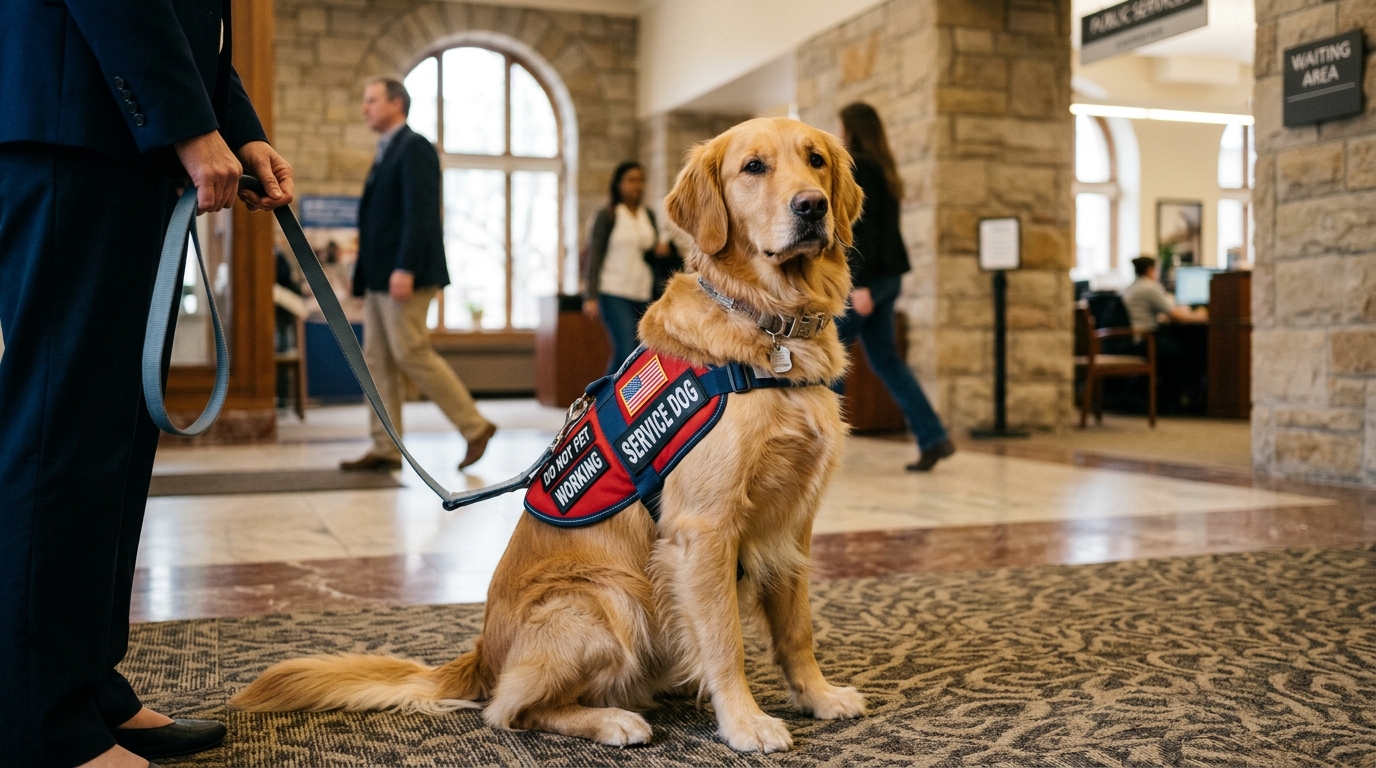
- The law targets individuals who purchase fake vests, certificates, or identification cards to pass off untrained animals as service dogs
- Repeat offenses carry increased penalties
Addressing a Growing Problem
The legislation responds to years of complaints from disability advocates and business owners who say the proliferation of fake service animals has created serious problems.
Untrained animals brought into restaurants, stores, and other public spaces under false pretenses have been involved in incidents including biting, property damage, and aggressive behavior toward legitimate service dogs. Disability rights organizations have long argued that fraudulent service animals undermine public trust and make life harder for people who depend on trained service dogs for independence and safety.
Under the Americans with Disabilities Act, businesses are limited in what they can ask about service animals — they may only inquire whether the animal is required because of a disability and what task it has been trained to perform. Advocates say this necessary privacy protection has been exploited by individuals who face little consequence for lying.
HB 668 does not change federal ADA rules but adds a state-level enforcement mechanism that gives Georgia authorities the ability to pursue cases of clear fraud.
Georgia Joins a National Trend
With the signing of HB 668, Georgia joins a growing list of states that have enacted laws specifically targeting service animal fraud. More than 30 states now have statutes addressing the misrepresentation of service animals, reflecting a nationwide push to protect both the rights of people with disabilities and the integrity of service animal programs.
The governor’s office released a statement indicating that the bill received strong bipartisan support in both chambers of the General Assembly and was backed by disability advocacy groups, veterinary organizations, and law enforcement associations.
What It Means for Georgians
For individuals who rely on service dogs, the law provides an added layer of protection for their animals and a deterrent against the fraud that has eroded public confidence in service animal designations.
Key points for the public:
- Legitimate service dogs are individually trained to perform specific tasks for a person with a disability
- Emotional support animals are not considered service animals under federal or Georgia law and are not covered by public access rights
- No registration or certification is legally required for a service dog — websites selling such documents are not recognized by the ADA
- Businesses may ask two questions: whether the animal is required for a disability and what work it has been trained to do
The law takes effect on July 1, 2026.
Marcus James covers politics for WACN 21 News. Contact at mjames@wacn21.com.