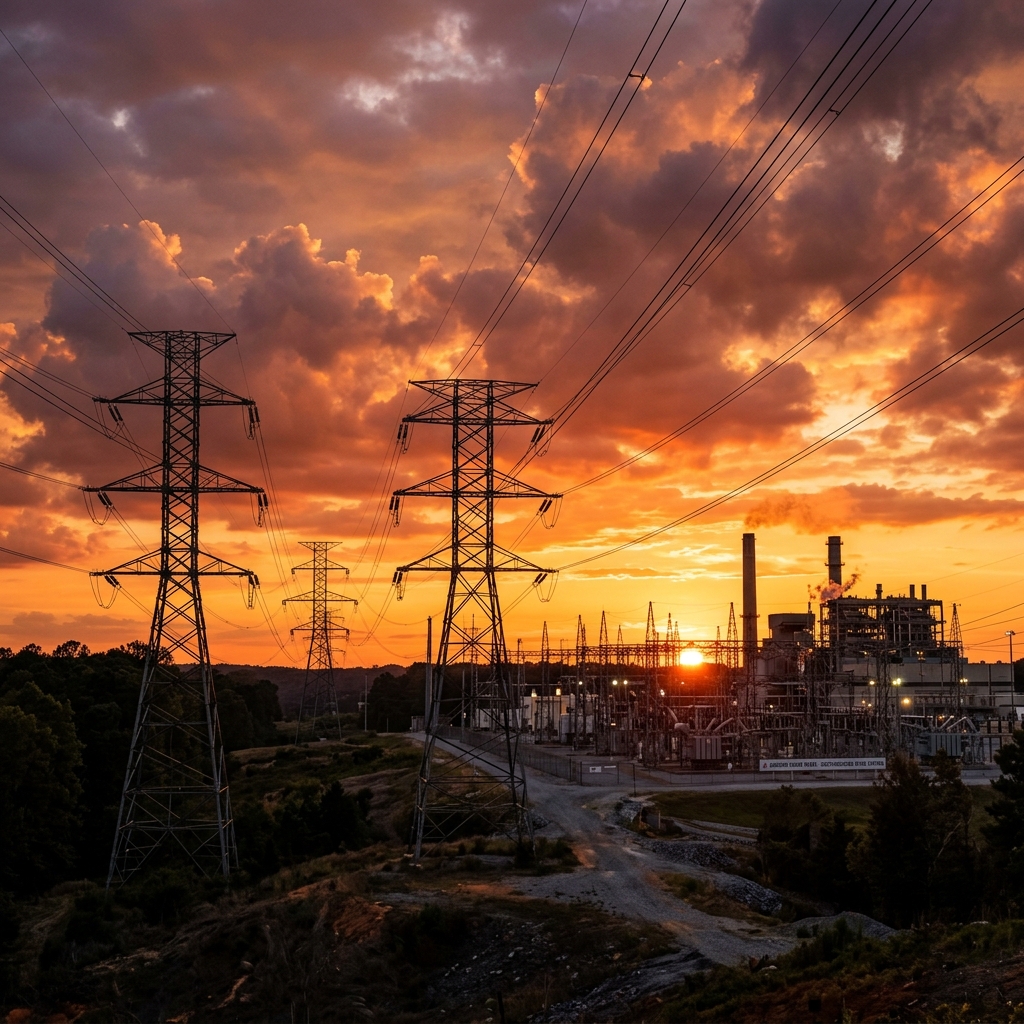

An intense early-summer heat dome settled over the American Southeast on Friday, pushing temperatures in metro Atlanta to a scorching 96°F—with heat index values peaking at a dangerous 106°F—and exposing critical vulnerabilities in the region’s public infrastructure.
At the Fulton County Jail on Rice Street, a facility already under federal scrutiny, the extreme heat triggered partial failures of the main cooling systems. Inside the jail’s oldest housing towers, internal temperatures reportedly soared past 90 degrees, prompting emergency mitigation efforts from the Sheriff’s Office and sharp condemnation from local advocacy groups.
Meanwhile, Georgia Power reported near-record electricity consumption as residents and businesses maxed out air conditioning units, prompting grid operators to monitor regional transmission networks for potential overload.
Crisis Inside Rice Street
The air conditioning failures at the Rice Street jail began late Thursday night when two of the facility’s aging industrial chillers shut down due to electrical surges, according to county maintenance logs. By Friday afternoon, housing zones in Towers North, East, and South were operating with little to no active cooling.
For the jail’s estimated 2,800 inmates, the cooling failure turned cell blocks into sweltering ovens. Jail staff deployed industrial fans and distributed extra ice and water, but advocates warn that fans do little more than blow hot air when ambient temperatures exceed 90 degrees.
“We are receiving reports from families that inmates are soaking their sheets in toilet water just to stay cool. The air is stagnant, and the medical clinic is already seeing an uptick in heat-related distress calls.”
— Devin Franklin, Policy Counsel for the Southern Center for Human Rights
The Fulton County Sheriff’s Office confirmed that technicians from the Department of Real Estate and Asset Management were working on-site to restore the chillers. In a statement, the agency said it is monitoring the heat index inside all housing units and has placed additional medical staff on standby.
“We are doing everything in our power to keep the population safe while emergency repairs are underway,” the statement read. “This facility is past its physical shelf life, and these system failures are exactly why a modern facility is desperately needed.”
Power Grid Under Pressure
Beyond the jail, the heat dome has tested the resilience of Georgia’s electrical infrastructure.
Georgia Power reported that electricity demand peaked at 22,400 megawatts at 4:15 p.m. Friday, approaching the all-time system record. The utility company issued a voluntary conservation notice, asking customers to raise thermostats to 78 degrees and avoid using heavy appliances during the peak hours of 2 p.m. to 7 p.m.
Small-scale transformers, which convert high-voltage electricity for neighborhood distribution, have been failing under the heat. In Midtown and East Lake, localized outages left approximately 3,400 customers without power for several hours Friday afternoon before repair crews could swap out the overheated equipment.
Climate Trends and Public Health
Public health officials warn that early-season heat waves are particularly dangerous because the human body has not yet acclimated to summer temperatures.
Grady Memorial Hospital reported treating 18 patients for heat exhaustion and heat stroke on Friday, compared to a daily average of three earlier in the week. The Fulton County Board of Health has opened five cooling centers at local libraries and recreation centers, offering air-conditioned spaces and cold water to the public.
Meteorologists expect the heat dome to remain anchored over north Georgia through Sunday, with high temperatures forecast to hover between 95 and 97 degrees. Overnight lows will remain in the upper 70s, preventing homes and buildings from cooling down naturally.
Devon Patterson is an investigative reporter for WACN 21 News. Reach them at dpatterson@wacn21.com or on X at @devonpatt.