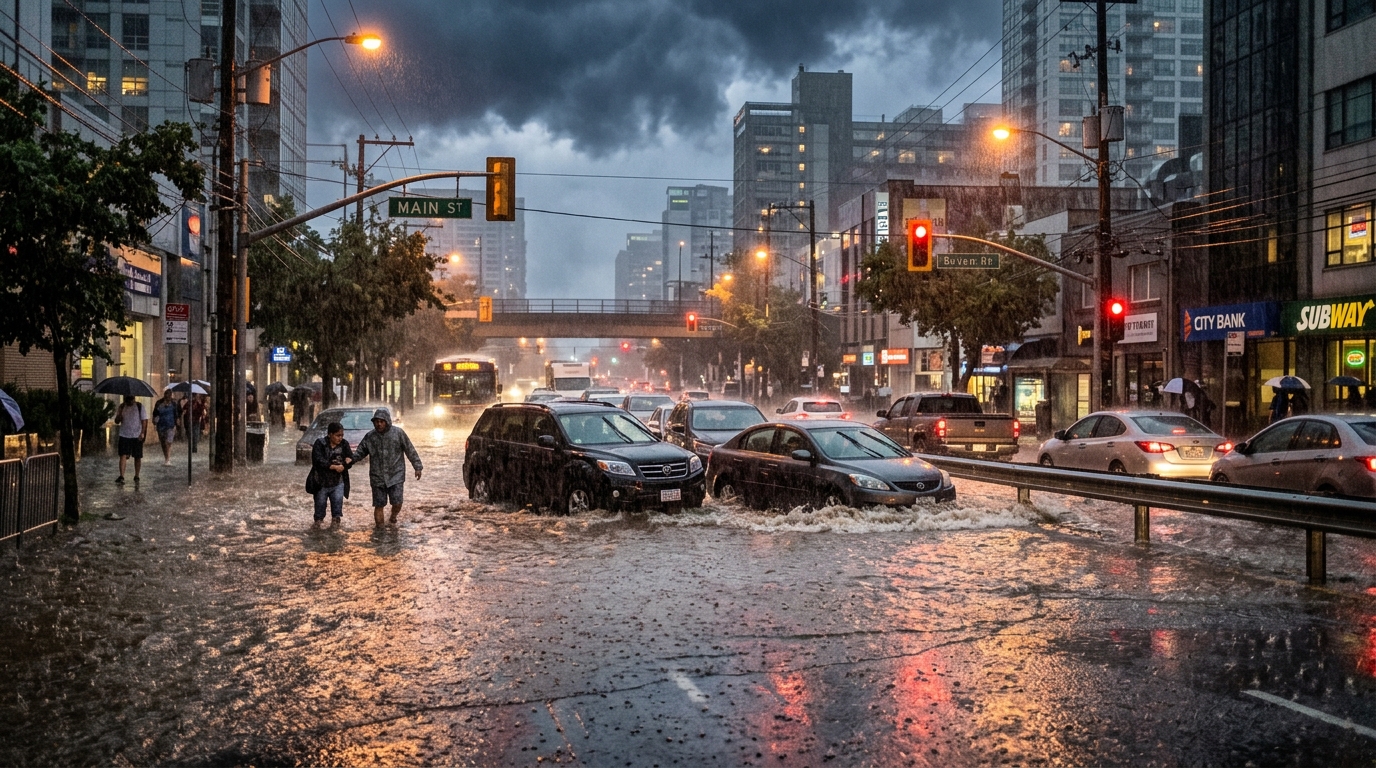

A line of intense thunderstorms dumped heavy rain across metro Atlanta on Tuesday, triggering flash flood warnings from the National Weather Service and turning major interstates into rivers of standing water that stranded motorists and forced emergency crews into action.
Roads Underwater Across the Metro
The downpours struck during the afternoon commute, overwhelming drainage infrastructure across the city. Multiple segments of I-75, I-85, and I-285 reported significant standing water, bringing traffic to a standstill and forcing the Georgia Department of Transportation to close lanes in several locations.
Surface streets fared no better. Low-lying intersections in Midtown, Buckhead, and portions of southwest Atlanta were impassable for hours as stormwater systems failed to keep pace with the rainfall rate.
Key impacts included:
- Interstate closures on portions of the Downtown Connector due to water over the roadway
- Lane shutdowns along I-285 near multiple interchanges
- Surface street flooding in neighborhoods across DeKalb and Fulton counties
- Extended delays on MARTA bus routes forced to reroute around flooded corridors
Water Rescues Underway
First responders carried out multiple water rescues throughout the afternoon and evening as drivers became trapped in rapidly rising floodwaters. Atlanta Fire Rescue and county emergency crews deployed swift-water teams to pull motorists from vehicles stalled on submerged roadways.
The National Weather Service urged residents to avoid driving through flooded areas, reiterating the warning that just six inches of fast-moving water can knock a person off their feet, and two feet of water can float most vehicles.
Officials across multiple jurisdictions reported no fatalities or serious injuries as of Tuesday evening, though several rescued individuals were evaluated by paramedics on scene.
NWS Flash Flood Warnings
The National Weather Service issued flash flood warnings for Fulton, DeKalb, Cobb, and Gwinnett counties as rainfall rates exceeded two inches per hour in some locations. The warnings remained in effect through the evening hours.
Forecasters noted that saturated ground conditions from earlier spring rainfall left the metro area especially vulnerable to rapid runoff, and that urban impervious surfaces — parking lots, roads, and rooftops — accelerated the flooding.
Chattahoochee Fish Kill Linked to Storm Runoff
In the days following the May 20 storms, officials confirmed a fish kill along the Chattahoochee River linked to the event. The heavy rainfall overwhelmed portions of Atlanta’s aging combined sewer system, sending a surge of untreated sewage and contaminated stormwater into waterways that feed the Chattahoochee.
The sudden influx of pollutants depleted dissolved oxygen levels in sections of the river, resulting in the die-off. Environmental officials said the incident underscored the ongoing challenges facing Atlanta’s stormwater infrastructure and the downstream ecological consequences of urban flooding events.
What Residents Should Know
Emergency management officials offered the following guidance for future flooding events:
- Never drive through standing water — turn around, don’t drown
- Monitor NWS alerts and local weather forecasts during severe weather
- Move to higher ground if flash flooding threatens your area
- Report sewer overflows or environmental concerns to local authorities
- Avoid contact with floodwaters, which may contain sewage and hazardous materials
The May 20 flooding is the latest in a series of severe weather events that have tested Atlanta’s aging infrastructure this spring. City officials have indicated that stormwater system upgrades remain a priority, though large-scale improvements will require years of investment.
Tom Whitaker covers weather for WACN 21 News. Contact at twhitaker@wacn21.com.